
Learning
Learning at USASB
Learning is larger than a curriculum
Learning at USASB includes curriculum, but it is not confined to a list of courses or a sequence of content to be delivered.
Students encounter ideas, disciplines, practices, skills, questions, works of art, scientific knowledge, mathematical reasoning, history, languages, technologies, physical challenges, practical responsibilities, relationships, and problems worth solving. Some learning is planned carefully in advance. Some emerges from a question, circumstance, project, opportunity, difficulty, community need, or encounter that could not have been scheduled months earlier.
The Educational Community therefore needs both intention and responsiveness. It preserves important inheritances while remaining capable of noticing what is happening in the lives of particular students and in the world around them.
Learning is not one method.
Shared Foundations and Individual Pathways
USASB holds together two educational realities.
First, there are Shared Foundations worth offering every student. Human beings enter a world already rich with language, mathematics, scientific understanding, historical knowledge, artistic traditions, accumulated practical wisdom, cultural inheritance, civic life, and ways of reasoning. Education should provide access to that inheritance rather than expecting each person to rediscover it independently.
Second, no common foundation requires identical educational journeys. Students differ in prior knowledge, interests, pace, capability, questions, challenges, and emerging purposes. A meaningful education must therefore make room for increasingly individual pathways.
Shared Foundations take practical form throughout the school: in Cohort conversations, sustained projects, individual instruction, Domain experiences, relationships with the wider community, common responsibilities, reading, practice, discussion, and other forms of work. Individual pathways develop through those same structures rather than existing in isolation from them.
Common education and meaningful choice can strengthen one another.
Cohorts Provide Continuity
For a substantial portion of the day, students return to their Cohorts. The Cohort provides continuity, belonging, and a stable context for work that benefits from sustained relationships. Students can develop long projects, conduct discussions, work individually, receive instruction, revisit questions, assume recurring responsibilities, and share experiences with people who know them well.
Because the Cohort remains together over time, learning acquires memory. A question can return months later. A project can grow rather than disappear when a term ends. Students and teachers can recognize changes because they remember what came before.
The Cohort is not intended to contain the whole curriculum. It provides a home within a much wider Educational Community.
Domains Open the Community
The Domains of Art, Science, and Business create broad environments in which students can encounter specialized knowledge, practices, tools, mentors, and forms of work. They are intentionally broader than conventional departmental labels and are not meant to divide human knowledge into sealed categories.
Art includes the many ways human beings make, perform, represent, interpret, and give form to experience. Science includes disciplined investigation of the natural and constructed world, mathematics, technology, experimentation, evidence, and inquiry. Business includes enterprise, organization, trade, production, finance, service, management, and the practical coordination of human activity.
The Domains overlap. A theater production involves art, technology, organization, finance, construction, communication, and leadership. A scientific project may require visual design, programming, budgeting, writing, and public presentation. A student developing a product may move among all three Domains without experiencing the work as three unrelated subjects.
The purpose of Domains is not to sort knowledge neatly. It is to create rich places in which knowledge can be practiced and connected.
Mixed-Age Learning
The wider portion of the school day opens into a deliberately mixed-age community. Students join studios, seminars, projects, ensembles, workshops, individual studies, specialized instruction, apprenticeships, research, service, and other experiences according to readiness, interest, need, and the nature of the work rather than age alone.
Mixed-age learning changes relationships. Younger students encounter models of developing expertise that are close enough to imagine. Older students sometimes discover what they know by helping someone less experienced. A student who is advanced in one field may enter another as a beginner. Leadership becomes situational rather than permanently attached to age.
This does not mean that age never matters. Development, safety, readiness, relationships, and the needs of particular students remain important. USASB simply avoids assuming that chronological age should determine every educational grouping.
Different Learning Requires Different Teaching
Some knowledge is learned well through direct instruction. Some requires repeated practice. Some develops through experimentation, discussion, observation, imitation, feedback, research, or prolonged work on a difficult problem. Some learning is individual; some is inherently collaborative. Some requires solitude. Some requires an audience.
USASB therefore does not organize itself around a single favored pedagogy.
A teacher may lead a seminar in the morning, demonstrate a technique after lunch, coach one student individually, observe a group project, recommend a book, organize a field experience, insist upon additional practice, or recognize that the most useful intervention at a particular moment is to step aside.
The method should serve the learning rather than the learning being reshaped merely to fit the preferred method.
Choice Is Meaningful Because It Has Context
Students have meaningful choices at USASB, but choice exists within an Educational Community containing knowledge, expectations, relationships, resources, responsibilities, and people with greater experience.
A student may pursue an emerging interest, propose a project, select among opportunities, seek specialized instruction, or spend substantial time developing expertise. Teachers may also invite, recommend, require, redirect, or challenge. Some opportunities depend upon readiness or previous preparation. Some responsibilities arise simply because a person belongs to a community.
Choice therefore does not mean that every educational activity begins with a student's spontaneous interest. Interests themselves can be educated. A person may come to care deeply about music, mathematics, history, carpentry, poetry, biology, or public service only because someone first opened a door the person did not know existed.
A rich educational environment expands the range of things a student can meaningfully choose.
The World Is Part of the Learning Environment
USASB does not assume that everything worth learning can or should be reproduced on campus.
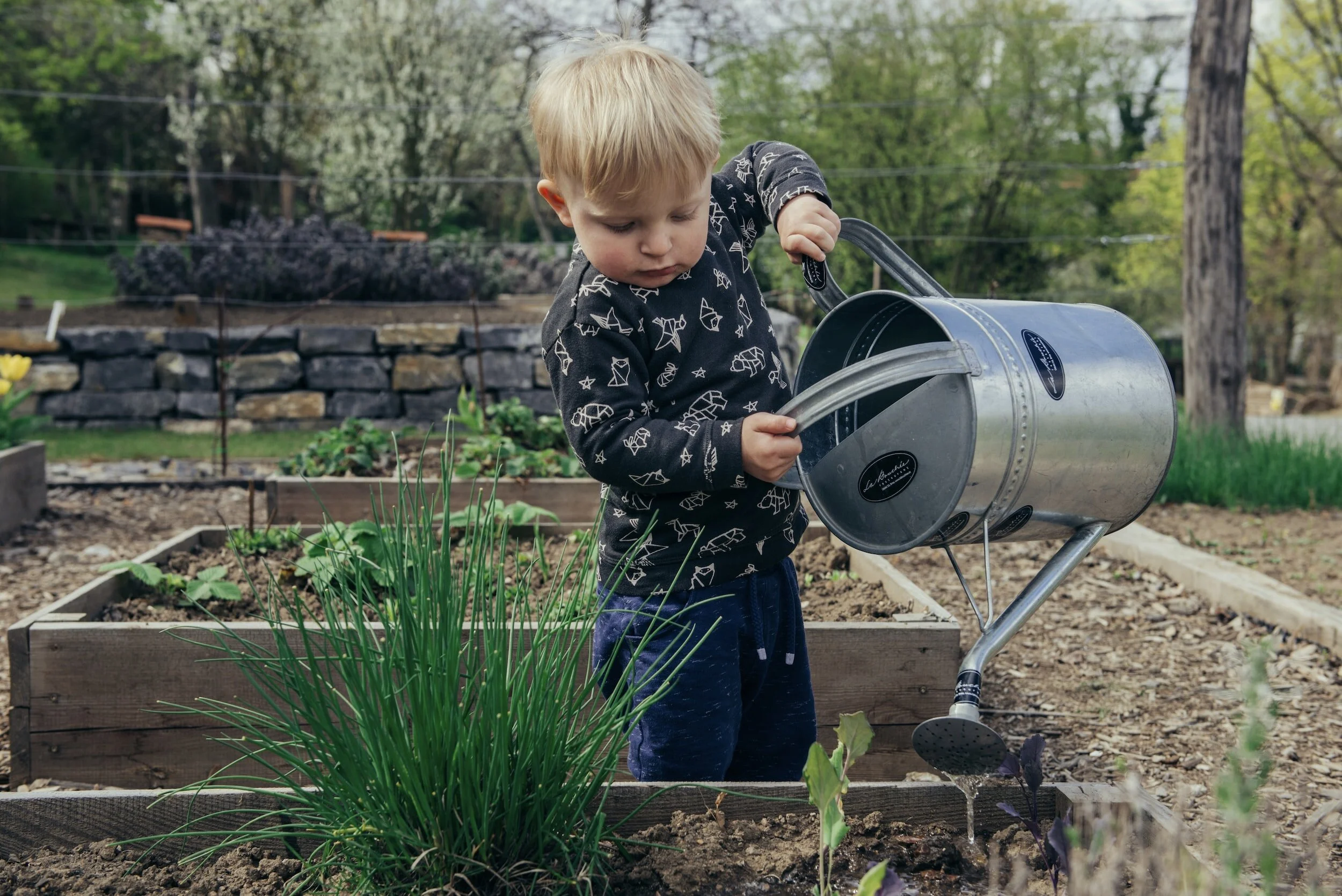
Homes, neighborhoods, businesses, libraries, museums, workshops, laboratories, farms, universities, theaters, parks, natural environments, civic institutions, cultural communities, and relationships with knowledgeable people can all become part of an individual pathway or shared experience.
These connections are not valuable merely because they are “real world” rather than “school.” The world beyond school contains expertise, complexity, history, consequences, responsibilities, tools, environments, and human relationships that no educational institution can manufacture completely for itself.
Learning beyond campus also changes the student's role. A student may enter a place where the purpose is not primarily to educate students at all. The student must learn how to participate, contribute, observe, ask appropriate questions, respect expertise, accept limits, and become useful within an existing human activity.
That experience can itself be educational.
Learning Leads Toward Contribution
Education develops capability, but capability eventually raises the question of what a person will do with it.
Students at USASB have opportunities to make things that are used, perform work for audiences, solve problems that matter, contribute to the community, teach others, accept responsibilities, organize events, conduct research, maintain shared places, create enterprises, and undertake work whose value extends beyond receiving a grade or completing an assignment.
Not every activity needs an external product, and learning does not need to justify itself through immediate usefulness. There is value in study, contemplation, experimentation, play, and knowledge pursued because it is worth knowing.
But over time, students should also discover that growing capability makes contribution possible.
Learning changes what a person can understand.
It also changes what a person can offer.
Explore Cohorts
Visit the Domains
Experience a Day at USASB
Explore Community & Beyond Campus